The Strategic Storytelling Framework
The Strategic Storytelling Framework is a disciplined seven-stage process, developed and refined over 20+ years of helping leading organisations achieve important goals.
It creates a clear line from what an organisation needs to achieve, through the people who can make it happen, to the story that will move them - and the impact it ultimately delivers.
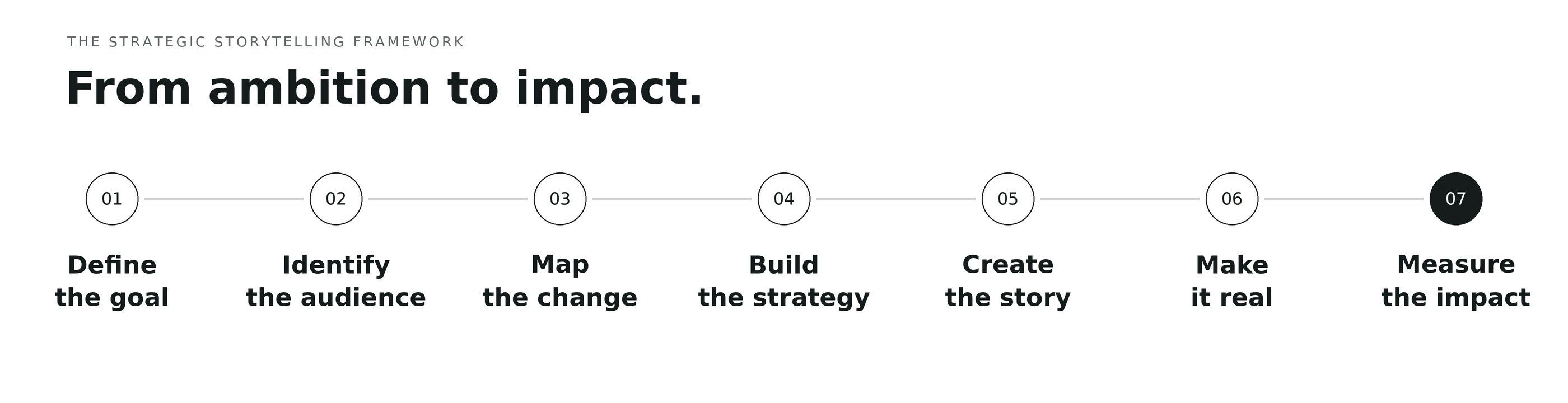
1. Define the goal
Every project begins with the business objective.
What are we trying to make happen? What would success look like? And how will we know when we have achieved it?
The goal might be inspiring a global workforce, securing a major contract or accelerating sales (for example).
2. Identify the audience
Who do we need to influence to achieve the goal?
It might be a board of regulators, a group of senior decision-makers, tens or hundreds of thousands of employees or millions of customers.
Understanding who holds the key to the outcome - and what matters to them - is essential.
3. Map the change
What do those people think, feel and do now?
What do they need to think, feel and do for the goal to be achieved?
THINK
What must they understand or believe?
FEEL
What emotional response will make that belief matter?
DO
What action or change in behaviour must follow?
The space between the current and desired state defines the challenge the story must solve.
4. Build the strategy
What will move the audience from where they are now to where we need them to be?
This means finding the human insight, strategic proposition and narrative capable of creating the required shift - distilling complex organisational ambition into something clear, relevant and compelling.
5. Create the story
Strategy gives the creative idea its purpose. Story gives the strategy its power.
This is where strategic thinking becomes world-class creative work: an organising idea and authentic narrative designed to win attention, create connection and inspire action.
6. Make it real
A powerful story is only as effective as its execution.
Now it is translated into the forms that will move the audience most effectively - delivered on the channels where it will land best. Often as campaigns, films, live experiences - or something else entirely.
Executing the story might require different disciplines, specialists and partners. But every execution must connect to our strategic purpose, reinforce our story and contribute to the change we've defined.
7. Measure the impact
What changed? What action followed? What measurable value did the work create?
Tracking results demonstrates what worked, reveals what can be improved and informs what happens next.
Goal - Audience - Map the Change - Strategy - Story - Execution - Impact
If you need to shape belief and inspire action then get in touch.